
RELATIONAL &
TRAUMA THERAPY FOR INDIVIDUALS & COUPLES
in Pasadena, CA
& online across California
Our past experiences can shape how we relate to ourselves, our bodies, and the people we love. I offer relational, attachment-focused, and trauma-informed therapy for individuals and couples, helping you understand patterns that may be keeping you stuck, heal from painful experiences, and develop greater safety, connection, and trust. I see clients in person in Pasadena and virtually throughout California.
Connecting mind, body, and relationship to support meaningful change
✹
Connecting mind, body, and relationship to support meaningful change ✹
Does This Sound Familiar?
You may find that:
You want meaningful change, but don’t know where to start…you’ve tried thinking your way through it, and you’re still stuck.
You notice yourself repeating the same patterns in relationships, even when you promised yourself you wouldn’t.
You often prioritize other people’s needs and feelings while losing touch with your own.
Your mind rarely turns off…you replay conversations, anticipate worst-case scenarios, or live a few steps ahead of the present.
You carry a quiet but persistent self-criticism that’s hard to soften.
Your body feels tense, wired, or bracing…even when nothing is “wrong.”
Rest feels difficult. Sleep isn’t fully restorative. It’s hard to truly settle.
Closeness can feel confusing…you crave connection but also fear being too much, not enough, or misunderstood.
Here, you don’t need to be polished or have everything figured out. Therapy is a space to bring your curiosity, your emotions, and your full lived experience. We can slow down, understand the patterns beneath what you’re experiencing, and create more room for choice, connection, and ease.
My Specialities
Together we can explore explore who you’ve been, how you’ve learned to survive, and who you might become with care, presence, and support.
-

CHILDHOOD & RELATIONAL TRAUMA THERAPY
Early experiences can shape how you understand yourself, navigate relationships, and respond to the world long after the original experiences have passed. Growing up without consistent emotional safety can lead to patterns like people-pleasing, hypervigilance, perfectionism, emotional numbness, or difficulty trusting yourself and others. In therapy, we honor these responses as adaptations while gently creating new experiences of safety, connection, and choice.
-
ANXIETY & PERFECTIONISM THERAPY
Anxiety can show up as worry, tension, perfectionism, or difficulty slowing down and feeling present. Sometimes these patterns develop in response to chronic stress, early experiences, or environments where you learned to stay alert and attuned to what others needed. In therapy, we approach anxiety with curiosity and compassion, exploring what these patterns may be trying to protect. Together, we work toward greater regulation, ease, and a stronger sense of safety and trust in yourself.
-

INTERGENERATIONAL & CULTURAL IDENTITY THERAPY
Our identities, family histories, and cultural experiences can shape what we believe about ourselves, relationships, success, and belonging. For adult children of immigrants and those navigating multiple cultural worlds, this can include pressure to succeed, difficulty setting boundaries, guilt around independence, or feeling caught between different expectations. Together, we explore these inherited patterns with curiosity and work toward greater self-trust, integration, and authenticity.

Therapy Rooted
In Relationship
Our experiences live not only in our memories, but in our bodies, our relationships, and the ways we've learned to protect ourselves. I believe healing happens through relationship: in the space between self and other, between body and mind, and between past experience and present possibility.
Together, we:
Notice how your nervous system responds to stress, safety, and connection
Explore the relational patterns that have shaped your life
Approach old beliefs and protective patterns with curiosity rather than judgment
Strengthen your capacity for connection, belonging, and self-trust
Through relational and somatic work, therapy becomes a space to build safety, deepen understanding, and create meaningful change over time.
How I Can Support You
INDIVIDUAL THERAPY
I offer individual therapy for adults navigating anxiety, people-pleasing, perfectionism, childhood and relational trauma, identity concerns, and patterns that feel difficult to shift. Our work is grounded in a relational, attachment-focused, and somatic approach that honors how your experiences have shaped the ways you move through the world. Together, we slow down, build self-understanding, and create more space for self-trust, choice, and meaningful change.
COUPLES THERAPY
Couples therapy focuses on the emotional and relational patterns that shape how partners connect, communicate, and respond to one another. Relationship struggles are often rooted in attachment needs and protective patterns—not a lack of love or effort. Together, we slow reactive cycles, deepen understanding of each other’s needs, and create more secure and connected ways of relating. My practice is LGBTQ+ affirming and welcomes couples of all orientations, identities, and relationship structures.

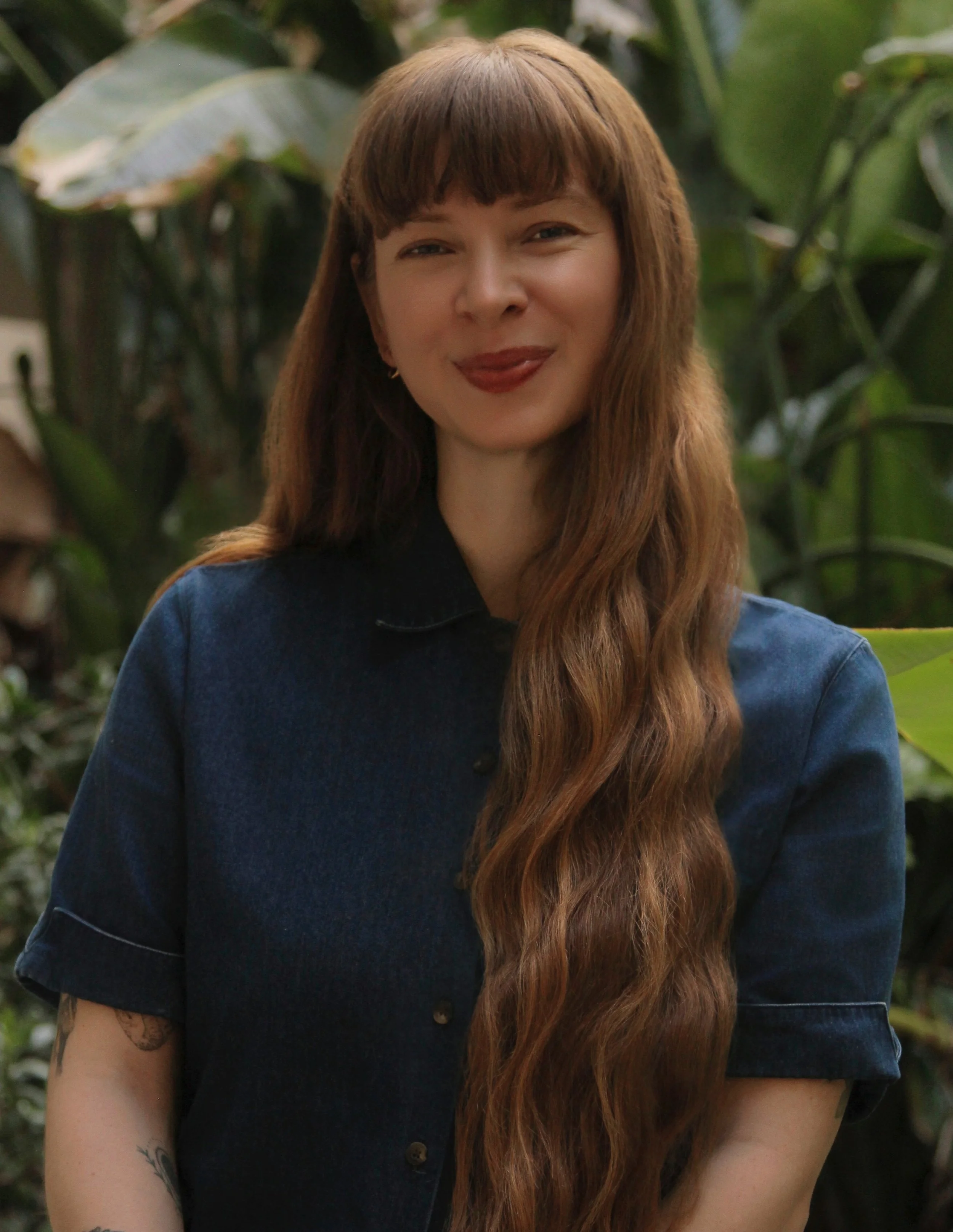
Meet Diana Sevastyanova
MA, AMFT
I work with adults and couples who want deeper understanding, more authentic connection, and greater ease in their lives and relationships.
My work is:
Relational & attachment-based: we explore how your relationships and attachment experiences shape the patterns you carry into your life
Somatic: we pay attention to how experiences show up in your body
Trauma-informed: we move at a pace that honors your nervous system and sense of safety
Culturally responsive: your identity, history, and context matter here
I offer a compassionate, grounded presence, meeting you in your experience rather than above it. My journey into this work has been shaped by years of embodied and somatic practice, trauma training, relational theory, and deep respect for the complexity of human experience.
Therapy Modalities
My approach to therapy is integrative, attachment-focused, and trauma-informed. I believe healing happens through a safe, attuned therapeutic relationship and through reconnecting with the wisdom of the body. Rather than relying on a single method, I draw from several complementary modalities to support whole-person healing.
-
Relational therapy recognizes that our relationships shape how we experience closeness, boundaries, trust, conflict, and connection throughout life. The relationship we build in therapy becomes part of the healing process, offering space to notice patterns such as people-pleasing, withdrawal, fear of abandonment, or difficulty expressing needs. Together, we explore these patterns with curiosity and care, creating opportunities for new experiences of safety, authenticity, and repair.
-
Emotionally Focused Therapy is an attachment-based approach that helps us understand the emotions and relational patterns underlying distress, disconnection, and conflict. Whether working individually or with a partner, EFT supports greater awareness of emotional needs and more secure ways of relating.
With couples, we focus on the cycles that keep partners stuck and create opportunities for greater responsiveness, vulnerability, and connection. In individual therapy, EFT can help you understand your attachment patterns, emotional needs, and ways of responding in relationships. Over time, this work can support greater self-understanding, emotional security, and more fulfilling relationships.
-
Eye Movement Desensitization and Reprocessing (EMDR) is a trauma-focused therapy that helps the brain and nervous system process experiences that feel “stuck.” Even when we understand something cognitively, past experiences can remain unprocessed in the body and mind—showing up as anxiety, intrusive thoughts, emotional reactivity, or a sense of being overwhelmed.
In our work together, we use bilateral stimulation (such as eye movements or tapping) to support the brain’s natural ability to reprocess these experiences. Rather than reliving the past, we allow it to move through in a way that feels more integrated and less charged. Over time, memories that once felt activating can begin to feel more distant, and new beliefs, clarity, and a sense of safety can emerge.
EMDR works at the intersection of mind and body, helping to shift not just what you think, but how you feel and respond in the present.
-
Somatic therapy is a body-based approach to therapy that helps address anxiety, trauma, and chronic stress by working directly with the nervous system. Even when we have insight or understanding, the body may still hold patterns shaped by past experiences — showing up as anxiety, emotional overwhelm, shutdown, or hypervigilance.
In our work together, we gently bring attention to bodily sensations, breath, and nervous system responses in the present moment. By slowing down and listening to the body with compassion, we support greater regulation, grounding, and emotional safety.
-
Internal Family Systems (IFS) and parts-based therapy offer a compassionate framework for understanding the different parts of yourself that have developed over time. These parts often show up as inner critics, anxious protectors, caretakers, or younger wounded parts — each shaped by lived experience.
Rather than trying to eliminate these parts, we approach them with curiosity and care. This process helps create greater internal harmony, reduce inner conflict, and strengthen your connection to your core Self — the part of you that is calm, grounded, and capable of healing.
-
Mindfulness-based therapy informs a present-moment, non-judgmental approach to therapy. Together, we cultivate awareness of thoughts, emotions, and patterns as they arise, allowing you to relate to your inner experience with more compassion and flexibility.
This approach supports emotional regulation, self-acceptance, and the ability to respond to life with greater intention rather than reactivity. Over time, mindfulness-based therapy can help loosen the grip of anxiety and self-criticism, creating more space for clarity and ease.
On The Blog
Reflections on healing, nervous system care, identity, and relationship—written with curiosity, compassion, and a belief in change that happens through connection.